
Signs the unit is near the end
- The floor of the tub or shower flexes or creaks when you stand in it
- Hairline cracks, especially near the drain or in the corners
- Staining or a dull, chalky surface that no longer cleans up
- Caulk at the base that keeps failing, or water marks on the ceiling below
- A soft spot in the bathroom floor right in front of the unit
Flexing is the one to take seriously. It usually means the unit was not fully supported underneath, or that something under it has changed. Each flex works the caulk joints and drain connection a little looser.
Why removal is more work than you expect
A one-piece unit is often bigger than the bathroom door because it was set in place before the walls were framed or finished. Getting it out usually means cutting it into sections. The unit is also fastened to the studs through its flanges and covered by drywall at the edges, so the wall around it gets opened up. That is normal, and it is part of why replacing one unit usually turns into at least a shower or tub surround project rather than a straight swap.
Your replacement options
A tiled walk-in shower
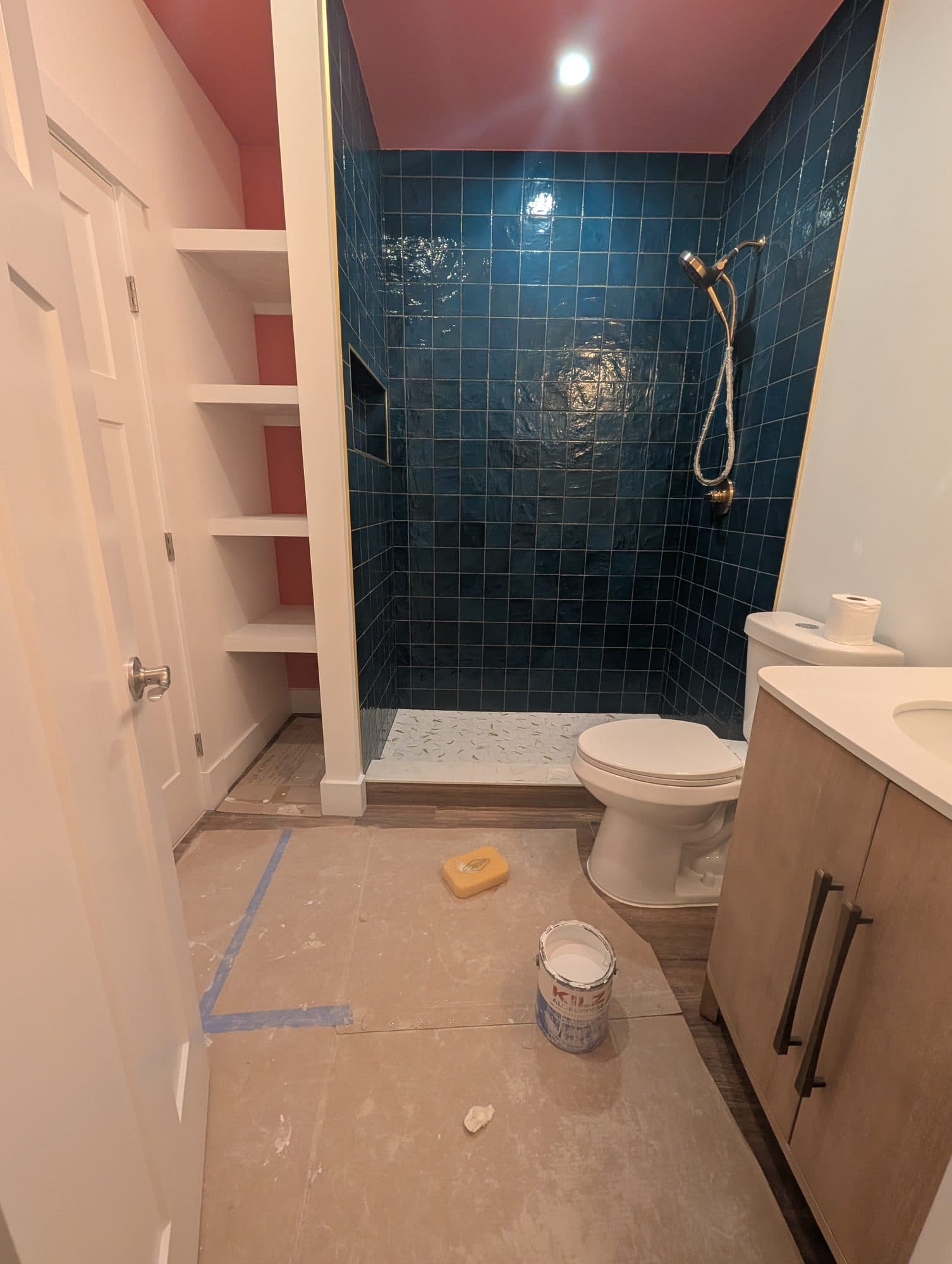
If nobody uses the tub, the alcove becomes a tiled walk-in shower with a waterproofing system behind the tile, a niche and a glass panel or door. Our Herndon remodel is built around a tiled walk-in shower; it is a good example of the finished look.
A new tub with a tiled surround
If you want to keep a tub, a new tub set on a proper base with a tiled surround above it gives you a more durable, easier-to-update finish than another one-piece unit. A built-in niche replaces the molded shelves you lose.
Another multi-piece or one-piece unit
Multi-piece units that assemble in the room exist and can suit some budgets. They avoid tile and grout entirely. Ask about the trade-offs in look, durability and how they handle future repairs.
What we often find behind an old unit
Once the unit is out, we check the subfloor around the drain, the studs on the valve wall and the condition of the valve and drain. Water that has leaked past failing caulk for years often shows up as staining or softness in the subfloor. Old shower valves may be worth replacing while the wall is open. These are not guaranteed problems, but they are common enough that your written scope should say how they will be handled and priced if found.
This is also where waterproofing matters. Bathroom Brigade uses Schluter waterproofing, such as Kerdi-Board and Kerdi-Shower kits, behind tile in wet areas. A tiled shower is only as good as what is behind the tile.
Planning around the removal
Cutting out an old unit makes dust and noise, and the bathroom will be out of service while the new shower or tub is built, waterproofed and tiled. If this is your only full bathroom, tell us before scheduling so we can talk through sequencing. In a townhouse, we also cover stairs and the path to the door, since the unit comes out in pieces through the house.
Think about how the new shower will be used before choosing finishes. A family that bathes small children will want a tub or a handheld shower; someone planning to stay in the home long-term may want a low threshold and blocking for grab bars. Both are easy to plan when the old unit is out and the walls are open, and much harder once the tile is up.
Permits
Replacing the valve, drain or supply lines is plumbing work. Inside the Town of Herndon, plumbing needs its own permit in addition to the building permit for the alteration. Outside town limits, Fairfax County lists new, repaired or relocated plumbing fixtures as needing a permit.
Cost
| Tier | Typical Scope | Range |
|---|---|---|
| Walk-In Showers & Tub Conversions | Replacing an old tub with a walk-in shower, or upgrading an existing one. | $8,000–$18,000 |
| Tile & Flooring | Shower surrounds, floors, and backsplashes installed to hold up to daily use. | $3,000–$9,000 |
Typical Northern Virginia reference ranges from Bathroom Brigade's published cost guide. They are a planning starting point, not a quote. The written scope for your Herndon bathroom sets the actual price.
Can you remove a fiberglass shower without damaging the walls?▸
Usually not entirely. The unit's flanges are fastened behind drywall, so the edges of the surrounding wall get opened and repaired as part of the job.
Can I put tile over my fiberglass tub surround?▸
We do not recommend tiling over a fiberglass unit. Removing it lets us check what is behind it and build proper waterproofing for the tile.
Why does my fiberglass tub flex?▸
Most often because it lacks full support underneath, or the subfloor under it has weakened. We check this once the unit is out.
Is a tiled shower harder to clean than fiberglass?▸
Not necessarily. Larger tiles with fewer grout lines and a good sealer or grout choice keep cleaning manageable. See our guide on easy-to-clean fixtures.